



Cerebral Palsy
Physiotherapy given together with whole-body vibration or a program aimed at core stability can improve balance in children with spastic cerebral palsy (CP), although whole-body vibration produced better results than core stability, a study from Egypt found.
Impairments in movement and posture associated with cerebral palsy occur in the developing fetal or infant brain and lead to “limitations in activities such as independent walking, stair climbing, running, or walking on an uneven surface,” the researchers wrote.
Get In Touch With Us
For FREE Online Consultation, please send us a message and we’ll get right back to you.
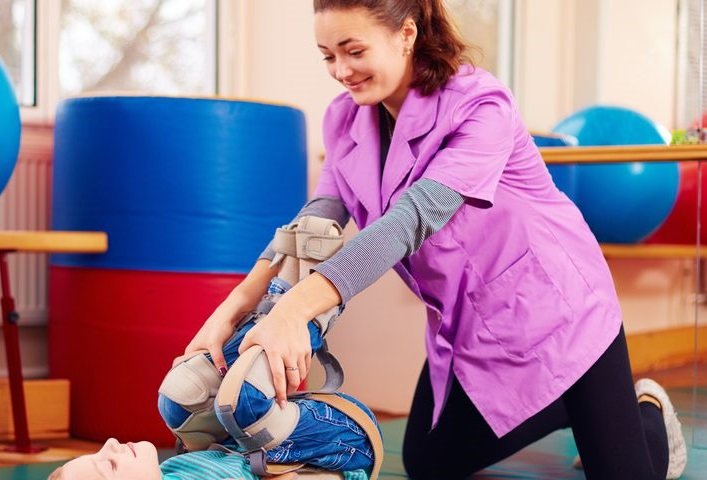
A young child typically begins to build core strength by continuously practicing active movements against gravity. However, children with CP have limited movement patterns, reducing strength and endurance in the main muscle groups. This can lead to problems with postural control (or the ability to position the body to give stability and orientation) in these children.
Core stability can improve both postural control and balance. Whole-body vibration is a practice where the individual stands, sits, or lies on a machine with a vibrating platform. This vibration transmits energy to the body, and strengthens muscles by forcing them to contract and relax several times per second.
It has been previously shown that this approach can improve the formation and maintenance of neuromuscular junctions — the site where nerve cells and muscles communicate — resulting in enhanced muscle strength in different situations, such as after a stroke.
Researchers with the Faculty of Physical Therapy at Cairo University investigated the effects of whole-body vibration and of a program to improve core stability on balance in 60 children, ages 5 to 8, with spastic CP (the most common type of pediatric CP). Children with both hemiplegia (where one side of the body, one arm and one leg, is affected) and diplegia (where both legs are affected) participated in the study.