



Bells Palsy
Bell’s palsy is a form of facial paralysis that is thought to occur after a viral infection. Symptoms like facial drooping, difficulty closing the eye on the affected side, drooling and loss of taste can appear suddenly. Symptoms generally resolve on their own within a few weeks but can also be permanent. Physiotherapists are trained to assess your condition and provide a customized Bell’s palsy treatment plan.
Get In Touch With Us
For FREE Online Consultation, please send us a message and we’ll get right back to you.
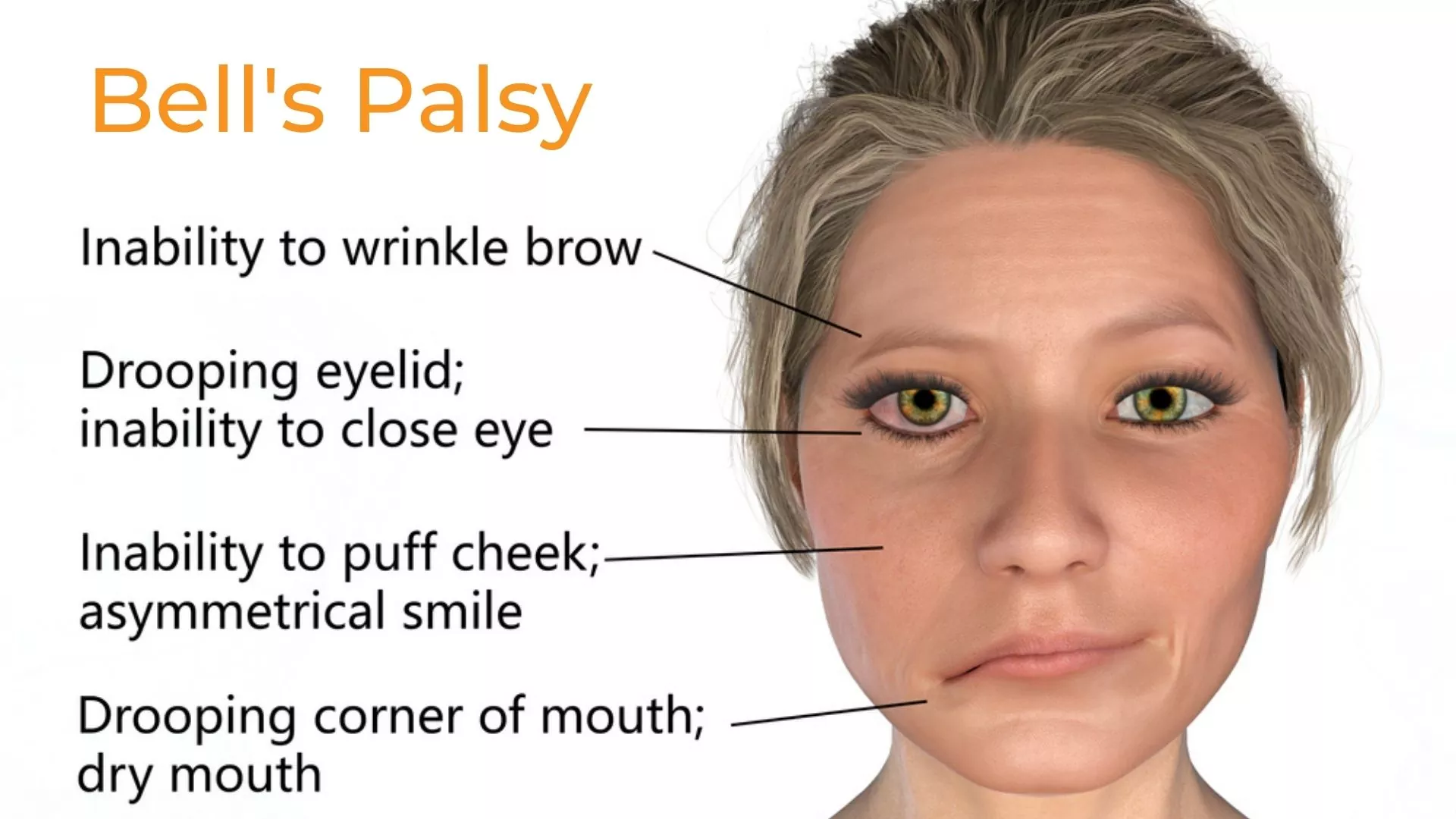
In this article we will look at the symptoms, causes and treatment of Bell’s palsy. We detail some of the stretching and strengthening techniques we use with some of our clients to help them regain the healthy pattern of movements needed for facial expressions and function.
What is Bell’s Palsy?
Bell’s palsy, also known as idiopathic facial palsy, is a form of temporary facial paralysis or weakness of the face. Generally, it affects only one side of the face; however, in rare cases, it can affect both sides. Bell’s palsy is believed to be the result of swelling and inflammation of the nerve that controls the muscles on one side of your face, which may occur after a viral infection.
This facial nerve (cranial nerve 7 of 12) directs the muscles on one side of the face, including those that control eye opening and closing and facial expressions such as smiling. The facial nerve also carries nerve impulses to the tear glands, the saliva glands, and the muscles of a small bone in the middle of the ear. It also transmits taste sensations from the tongue.
For most people, Bell’s palsy is temporary. Symptoms appear suddenly over a 48 – 72-hour period and generally start to improve with or without treatment after a few weeks. Recovery of some or all facial function typically occurs within six months. In some cases, residual muscle weakness lasts longer or may be permanent. In rare cases, Bell’s palsy can re-occur after the initial episode has resolved.
Bell’s palsy is the most common cause of facial paralysis. It affects about 40,000 people in the United States every year. Anyone can be affected regardless of age or gender, but its incidence seems to be highest in those in the 15- to 45-year-old age group.